Showing posts with label Wine Travels. Show all posts

Friday, April 18, 2014

Beach, Bacon, and Booze Visiting Ölüdeniz, Turkey

This piece first appeared on http://www.foodtravelist.com/ Check it out for all things food and travel related.

So you've been travelling through Turkey for a few weeks now. Perhaps you've been educated by the lengthy role this country has played in history. Maybe you've been rendered speechless by the natural wonders. Definitely you've put on a few pounds, having indulged in all the great Turkish specialities. But maybe, just maybe you would give anything for a slice or two of bacon with your kahvalti (breakfast). If you are looking for a little slice of the Western world in this unique foreign country, the beach town of Ölüdeniz is perfect for the homesick Traveler. Most of the signs are in English in this small village in the Fethiye district. Tiki bars line the streets offering a variety of nightly specials like my personal favourite 2 for 1 Margaritas. Then there's the bacon. Not only does just about every brunch joint serve a traditional English breakfast but Ölüdeniz has it's own Porky's, so you can stock up on Pork products if you so desire. 

Once your bacon craving has been satisfied, it's easy to see why Westerners, and Turks alike flock here in the summer months. The beach called Belcegiz pronounced Beljehiz is where the Aegan meets the Mediterranean. The water is clear, warm, and a celeste turquoise blue. The sand is soft and white except for at the water's edge. Here there is a metre wide bench of stones, that add a great percussion to the crashing of the waves, but are not so kind to sensitive feet. I recommend water shoes, especially if you have kids with you. Access to the beach is free but there is a $5TL fee if you want the comfort of a beach chair or umbrella. 
Inline image 2

The beach couldn't be more relaxing, but if adrenaline pumping is more your style, paragliding off Mount Babadag will surely do the trick. The elevation is almost 2,000 metres, thats 6,400 feet up. It takes about 50 minutes to get to the top and another 50 to paraglide down, while you enjoy a view fit for the gods. Prices start at around $250TL which is about $120 US. You want to check for two things before booking with a company; 1 they offer insurance and 2 you are going to the very top of Babadag. Some companies only go halfway up which means you end up flying for only 10-15 minutes often for the same price as the 50 minute adventure. 
Inline image 3

Some other great activities available in the area include; day long boat trips that provide lunch, great views of the coast and the best swimming spots. Hiking the Lycian way. Rock climbing. Or try out a rejuvenating full body clay mask. Inline image 1

Monday, January 27, 2014

10 Reasons you should start drinking Austrian wine

"Austria makes wine? Aren't they known for beer?" This is the typical response I get when I suggest an Austrian wine to a guest or a friend. My answer is always "Yes they make a great brew, but their wine is among the best in the world." And here is 10 reasons why you should give Austrian wine a chance.

#1 Purity. Yes, we all love a delicious piece of salmon dressed up in a delicate creamy caper beurre blanc, maybe even cooked on a cedar plank. But a piece of salmon sashimi is pure. It allows you to focus on the satin texture of the fish, to really taste just the salmon in all its glory. To me that is what stands out about Austrian wine, and in particular the wines of Rudi Pichler, a producer from the Wachau Valley. I have likened drinking his wines to being like diving into a crystal clear lake. Your mouth feels so refreshed and clean after a sip of his wines, it can be difficult to stop sipping. The texture of the wines, that is the way they feel in your mouth which is luxuriously silky smooth is not oily. The wine doesn't coat your tongue, like the way a piece of salmon all done up in a sauce can. It just glides over your mouth, leaving you with a impeccably pure finish. 

#2 Terroir driven. A word we see quite often in description of the world's finest wines. But many have a hard time wrapping their brains around the concept. I think of terroir perfected wines being like a pristine beach day.  You pack up the car and get out of the city in record time. When you arrive at the beach the weather is optimum, and there is hardly a single other person to invade your space. A light breeze is blowing, just enough to keep you cool, but not enough to blow the sand around, and there isn't a cloud in the sky. The ocean is refreshing yet still warm enough that you can stay and swim for as long as you want. Bonus there is not a jellyfish or stray piece of seaweed in sight. The drinks stay cold, the sandwiches sog free. You drive off as the sun is setting, an intense combination of pinks, reds, and oranges thankful for such a perfect day. A terroir driven wine is like that, it's as if all the factors in the universe (weather, soil, fermentation) have agreed to come together to create a consummate wine. A wine that tastes like a place not just a beverage. The Wohlmuth winery in the Southern region of Styria, is a great example of Austrian wines ability to capture that perfect beach day vintage after vintage, no matter how difficult it may be to farm the terroir. Wohlmuth is home to some of Europe's steepest vineyard sites a slope of 80º in some places. They are an average of 500 metres above sea level, and have a combination of rare red, grey, and black slate. It reminds me of a beach I was shown in Ragland New Zealand. I was convinced the van was going to topple over on the twisty mountain dirt road that took over an hour to navigate. When I finally arrived, I was rewarded with a stunning black sand beach coupled with beautiful big waves and framed by giant lush green cliffs. Wohlmuth is rewarded for farming these difficult conditions with wines of a incredibly unique spicy, salty character (hence all my beach references). When I drink a Wohlmuth wine I feel like I am standing/leaning right in the vineyard. 


#3 It pairs with...just about everything. Artichoke, and Asparagus. Pad Thai, and Peking Duck. Curry, and Cakes. Salads, and Seafood. Austrian wine can enhance just about any dish, due to its perfectly balanced acidity, and great fruit aromas. There is a wide variety of wine styles in Austria, but the friendliest grape for all the above dishes is the native Grüner Veltliner. The Knoll Winery in the Wachau has embraced this food camaraderie by opening up a restaurant right next door, perfectly situated along the Wachau bike trail. Loibnerhof-Knoll showcases the explosive, tight wines of this incredible producer alongside traditional Austrian cuisine. They are renowned for a Butterschnitzel ravioli with greaves, and when paired with a Emmerich Knoll, Grüner Veltliner Smaragd, the result will leave you unable to continue by bike. 

#4 Friends of the planet. Every winery I visited in Austria mentioned the care and consideration that they take to ensure a symbiotic relationship with nature. The Lagenlois producer Loimer is a leader in Austria when it comes to "Green Winemaking". He is the founding member of a local group called Respekt. The group's main focus being, yep you guessed it, respecting the land that gives them their crop. Loimer has adopted the ideals of fellow Austrian Rudolf Steiner's anthroposophy based bio dynamic practices. I think of bio dynamic practices being a bit like psychology for the earth. Now for this analogy to work, the patient (the earth) in this case is suffering from minor depression, nothing like Bipolar or Schizophrenia. Any Doctor will tell you exercise and eat right and your body will feel better, which takes care of the organic portion of the philosophy and analogy. But what about your mind? Some prescribe pills, some placebos, or in the bio dynamic case sometimes it involves an animal's horn. But sometimes we just need to feel someone is listening, that we are being heard to feel better. That is what I believe Bio Dynamics is at it's heart. Listening to the earth, and hearing what it needs to be happy, through the lunar cycles, and the changing seasons. The earth does not like herbicides, pesticides, or artificial ferilizers, they are like junk food. The earth prefers natural fertilizers like those that are imparted to the ground from Loimer's herd of sheep. Fred Loimer has been certified biodynamic for over 7 years now, which is perfectly displayed in his beautiful racy fruit driven wines.  

#5 Small producers. I have never been a subscriber to the belief that bigger is necessarily better. Especially when it comes to farming I think it is much more important to ensure quality over quantity. That is not to say that large scale producers cannot produce fine wine, but it's the difference between shopping at a farmer's market versus Cosco. I love getting a great deal at Cosco, on toilet paper and meatballs, but the chance to speak with the farmer and ask how his crop has been is invaluable. This small scale production and opportunity to speak directly to the winemakers was a factor that I noticed and greatly appreciated in many of the Austrian wineries I visited. It is also a big piece of the puzzle as to why Austrian wine is so divine. Let's take F.X. Pichler for example, a winery that has received massive praise from Robert Parker Jr. (he calls it the Romanée-Conti of the Wachau). This winery employs 7 people, 4 of which are F.X. himself, his wife, his son, and his daughter-in-law. They farm only 18 hectares of vines, while the largest producer in the world E&J Gallo have 16,000. The most surprising part besides their incredibly elegant wines is that F.X. Pichler does not proudly boast family owned and operated on their wine label. A term I have seen haughtily displayed by many wineries that I then have visited, and not a single member of the family appears to be present at the winery, or actually have anything to do with making the actual wine. So what does this small scale production yield? Well if you have ever tasted a F.X. Pichler wine you may find it is like putting on a Oscar de la Renta dress or an Armani suit. You feel sumptuously beautiful, while drinking their wines. You taste that every grape has been cared for, just like every stitch was carefully sewed. The wines have subtly balanced sugars, and a exquisite smooth texture, yes you pay more for this kind of attentiveness, but when you want to treat yourself, you may as well treat yourself like nobility.

#6 An opportunity to learn German. Sure the labels of Austrian wine can be extremely intimidating take the producer name Jurtschitsch, pronounced yur- schiche no matter how you twist your tongue it just doesn't seem to sound correct. However, it has been my experience that the more difficult something is the more you appreciate it. Jurtschitsch's wines are truly remarkable. Alwin Jurtschitsch and his wife Stefanie have done a great job of preserving the old traditions while ushering in the new technologies. Their wines have an intense bracing minerality, coupled with a clean and clear sense of terroir. So don't let the hard to say words scare you off,  you will be missing out on some seriously scrumptious wine. Instead take it as a opportunity to learn a bit of German. Here is a crash course to help you navigate some of the more common terms seen on a wine label. Erste Lage, or Smaragd = Grand Cru = really good wine.  Schloss = Castle. DAC= Districtus Austriae Controllatus= Regional designations like DOCG in Italy. Weingut= Winery. Wien= Wine but also Vienna. Niederösterreich= Lower Austria (largest quality wine growing area). STK= Steirische Klassik-Winzer= Styrian Classic Vintners. Eiswein...well I think that one is pretty self explanatory. I could go on forever, but this should be enough to help you navigate at the liquor store, and get you started on enjoying delicious fine wines like Jurtschitsch.


#7 Sauvignon Blanc. Yes, yes we all love New Zealand Sauvignon Blanc, with its pretty pink grapefruit aromas, what's not to love. I am not going to debate on one being better than the other, but drinking only NZ Sav Blanc is like going into a DSW shoe outlet and trying on only 1 pair of shoes. Of course that one pair is fabulous but with so many other options why not try on a few more. The Southern part of Austria, pressed right up against the Slovenia border is where you can find that hidden pair of Jimmy Choo's marked down by %50. The single vineyard Grand Cru STK quality Sauvignon Blanc produced in this region will blow you away. It has an aging potential of up to 15 years, and prices for a Premiere Cru STK are about the same as a bottle of Kim Crawford. Spicy, and complex with aromas of currants, and tropical fruit. The two Kings of Sauvignon Blanc besides Wohlmuth (which I have previously mentioned) are Tement and Polz.  Neighbors that share the vineyard Grassnitzberg but in terms of style are like a pair of Alexander Mcqueen's and Louis Vuitton. Both make you feel beautiful, and luxurious, but Tement is like Mcqueen wild and exciting with its combination of cool fruit flavours, and a spicy heat, that leaves your mouth reeling from the sensation and begging for more. While Polz is like Louis Vuitton classic and elegant. The ancient coral reef that their signature Grand Cru comes from HochGrassnitzberg reveals itself to you through layers of exotic fruits, and has a lovely long lasting lemon finish.

#8 Grüner Veltliner. Another word that may intimidate your pronunciation ability, but really it sounds just like it looks. This Austrian native is the most commonly grown in Austria, it is food's BFF and is truly enjoyable to drink. The wine typically gives off stone fruit aromas and has a white pepper spice to it. The Schloss Gobelsburg of Lagenlois is one of the oldest wineries in the world, and that history has imparted a knowledge that has allowed it to make truly earth shattering Grüner Veltliner. It dates back to 1171 when the Cistercian monks first acquired the vineyards around Heiligenstein, and Gaisberg, although they did not take ownership of the actual castle until 1740. Much like what the Cistercians did for Burgundy, they did for Gobelsburg and Grüner. The Castle still belongs to the Monks but is now managed by Michael Mooseburger and his wife Eva. It can offer over 10 different Grüner Veltliner's ranging in style from decadent Eiswein to terroir perfected Erste Lage single vineyard sites; like Grub and Renner. If knowledge is power Schloss Gobelsburg is a Master when it comes to Grüner Veltliner. The expertise passed down from centuries of the Cistercians farming the land around the castle is well observed in the consistent quality of the wine, and each wines unique character, but the knowledge winemaker Michael Mooseburger brings to the label should not be overlooked either. Son to the founding member of the Austrian Sommelier Association, Michael has a pulse on what the market is looking for, and a quiet confidence in his unlimited knowledge of not just his vineyards but of wines from all over the world. Between tradition from the monks and an encyclopaedia of knowledge from Michael it's no wonder Schloss Gobelsburg is a superstar of Grüner Veltliner.

#9 Riesling. For wine lovers just that one word should be enough to convert you. Rieslings although commonly misconstrued as a sweeter style wine, when they come from Austria they are almost always bone dry. They can be a textural adventure of silk with such a powerful minerality to them you will wonder how fruit and soil can combine so deliciously. The light silky structure doesn't feel like a jacket for your tongue, more like a light brush of wealth. Riesling has this incredible crispness to it, like biting into a perfectly ripe apple. The acidity is powerful but never harsh, and the final product leaves you with a wine that has both power and elegant grace. Riesling thrives all over Austria but the Riesling superstar is the mountain Heiligenstein,with it's primary rock deposits some 250 million years old. Producers from the Kamptal like Schloss Gobelsburg and Jurtschitsch both have a small plot of vines on in. The Zeus of Austrian vineyards has been noted for its wine potential since the 13th century, time tested and true. If you see this name on a Austrian wine label grab it! But to be fair Heiligenstein is far from being the only great mountain for Riesling, the Wachau Valley has many great sites for Riesling as well, including Liobenberg, Kellerberg, Achleiten.The point I am trying to get across is that Riesling is a true delight to drink and I think Austria makes one of the finest examples of the grape variety, so you shouldn't miss out any longer.

#10 Co-operatives. I love when people work together, instead of competing and trying to cut the other down. Many Austrian winemakers share machines between producers, allowing small scale farmers to produce a wine without having to purchase an expensive wine press. There are almost 60 different wine making associations in Austria, that all work in sync to ensure the highest quality of wine is produced with the patriotic red and white seal. Heiligenstein as I mentioned is shared among several growers, which also allows you to taste a winemakers style in comparison to another from the same vineyard. This spirit of co-operation benefits all, especially the consumer. They are like Mathletes, a team effort that is always striving to not only succeed but to supersede all expectations and give us the best possible product by working together not against each other. Take the Vinea Wachau Nobililus Districtus. An organisation that includes some 200+ wineries all from the Wachau Valley, that work together to promote the Wachau on a whole. But they also hold themselves to an even higher level of quality than the already strict Austrian requirements. They even have their own 3 tiered wine designations. Steinfeder the lightest, Federspiel with a bit more character , and Smaragd the Grand Cru and most treasured of the vineyards of the Wachau.  Just like a Mathlete each winery has the challenge of meeting the strict requirements and answering the question correctly, but only by working as part of a team will they all flourish.

I hope this article has convinced you to start drinking Austrian wine whether it be the Native Grüner Veltliner, a Noble Rielsing, a Grand Cru Sauvignon Blanc or one of the other tasty grape varieties Austria makes that I didn't mention here. Don't let the names scare you off, and if worst comes to worst and you find you don't like Austrian wine well you can always fall back on their delicious beers.


Thursday, June 13, 2013

Okanagan Valley

The way I started my career in wine was one of those miraculous right time right place type things. I was exposed to some top notch wines right off the bat. I mean some of the most famous and most expensive wines in the world. I'm talking Cristal and Dom Perignon, 1st Growth Bordeaux from 1985.  I helped decant and taste test 4 vintages of Sassicaia alongside Piero Incisa Della Rochetta, grandson to the creator of Sassicaia himself. I even got to travel to Napa Valley and get VIP tours of some of the best wineries Napa has to offer. But during this entire time I think I got to try maybe 2 Canadian wines; a Inniskillin Ice Wine and a Henry of Pelham Chardonnay so when I moved back to Vancouver this fall I was at a serious disadvantage. In Canada I am quite proud to say we really support our local wineries and most restaurants offer only a few wines from outside Canada. So there I was with all this wine experience but I had neglected my native country and now I needed to play catch up. Then luckily I had some lieu days at work buildup that coincided with my some time off for my husband so we organized a short 3 day trip over to the Okanagan Valley.

The drive up and over the mountains was just stunning. The snow sparkled off the mountains and was so blindingly bright and untouched it was magnificent.

Then just like that we rounded a corner and before us was this beautiful valley with a lake running right down the middle for as far as the eye could see. The mountains that rose up on both sides of the lake had lush patches of green amongst rocky outcrops. And of course grape vines all over the place.

The road has a nice lazy sort of curve to it and we followed Siri's directions to our first stop; Quail's Gate. The tour was led by a very sweet elderly gentlemen who did a great job telling us all about the Stewart Family and how they got into the wine business (I could give you all the details but why ruin the tour for everyone else who wants to partake). Then we had a lovely little tasting that included a tasty Chasselas White Blend, and a rich Foch. Chasselas is grown in France, Switzerland, and few other old world countries but it was the first vinifera variety Quail's Gate planted. Foch said like Faush is a native Canadian grape variety. You can find my reviews for these wines on Natalie Maclean's website Quails' Gate Estate Winery Old Vines Foch 2009 | Wine Reviews by Natalie MacLean  Quail's Gate Chasselas-Pinot Blanc-Pinot Gris 2012 | Wine Reviews by Natalie MacLeanWe had lunch at the restaurant in the winery and it was beautiful, great outdoor seating, and amazing wine prices. I had a delicious Stewart Family Reserve Chardonnay. The only downside was that for the price I was not blown away by the food. I had a smoked salmon and beet salad, that was kinda dull.

Our next stop was at the top of a hill and is home to probably the most widely recognized BC brand Mission Hill. Now this winery is jaw dropping, it just screams money, and is so beautiful you never want to leave. 
You start out the tour with a great video that founder Anthony Von Mandl stars in and then you go through a tour that is as much about the architecture as it is about the wine. The cellar is home to a locked up cave of treasures both of Mission Hill early vintages but gifts from other wineries that had visited over the years as well. 
They also play host to some amazing musicians in their bowl shaped mini amphitheatre including this summer the Gypsy Kings. My husband and I tested out the acoustics for ourselves and wow they are great!
So with all this investment in the property surely you would think the wine will be outstanding as well. Now we only tasted 3 wines but each one was disappointing to me. The Riesling had too much heat, the Sauvignon Blanc not enough, and the Shiraz was flat and lifeless. Now maybe the wines had been open too long, but for the price Mission Hill bottles go for I was expecting more. Still though, visually this winery will take your breath away, and I wouldn't write off all of Mission Hill's wines just because of one bad tasting.  We carried the Special Lot Collection Syrah at the restaurant I managed and I found it to be quite delicious, but expensive.

So it was getting to be late afternoon by the time we finished up so we decided to head to our hotel in Osoyoos. To better understand the Okanagan Valley it may help to break it down into regions, sort of like Napa Valley is except they are still not VQA recognized regions like Carneros is a Napa Valley AVA. The Okanagan Valley is about 250km in length. At the top is Penticton and Kelowna where Mission Hill and Quail's Gate is located. Then you pass through Okanagan Falls where See Ya Later Ranch is, then there is the Naramata Bench where Red Rooster is and then finally at the bottom of the valley is Osoyoos where the first Native owned and operated winery is Nk'Mip (Ink-A-Meep) and also where my husband and I stayed for the trip. Spirit Ridge is the name of the Resort in case you want to make a booking.

We enjoyed a late dinner at the restaurant in the resort called Mica, it was a funky little place and the view was beautiful. I did find it very odd that only 2 wines from the very winery that was less than 500 feet away could be found on the wine list, but the restaurant has a very nice vibe to it.
  The next morning I took my tour of Nk'Mip on my own. I was really impressed by the tasting at Nk'Mip  particularly their reserve series Qwam Qwmt (pronounced Kwaim Kwempt) to see a review of the Merlot I tasted just follow the link 2008 Nk'Mip Qwam Qwmt Merlot 2008 | Wine Reviews by Natalie MacLean
We decided to have lunch at the Winery's restaurant and were pleased to find lots of Nk'Mip selections on this list, plus my favourite: tables right out on the grass!

We spent the rest of the day taking a nice leisurely stroll along the lake, and decided to stay in for the evening and BBQ with the complimentary grill that comes with every room in the Spirit Ridge Resort. I mean come on people alone at a beautiful resort with my handsome husband you must forgive me if learning about wine took a back seat for a day.

The next morning I started at La Frenz in the Naramata Ridge. A lesser known brand but a great selection of wines, and I would expect with all the awards they have been winning lately we will be seeing more of them. Here is a link to my review of a great fortified wine they have.La Frenz Estate Winery Muscat | Wine Reviews by Natalie MacLean
Our final stop before returning to Vancouver was at Red Rooster. A fun tour and great tasting. I loved hearing about their Malbec program. You can adopt a row of grape vines, then for that year you come and help out in the vineyard in Spring and then come back in the Fall getting a chance to learn and work alongside winemaker Karen Gillis you end with a wine you can actually say you had a hand in making. I hinted pretty strongly to my husband what a great Christmas present it would make, whether he caught the hint, I will have to wait until Christmas to find out.

All in all it was a great introduction to Canadian wine, now I just need to get to Niagra!


Monday, March 25, 2013

The Paradox of Wine inTurkey

                   Why is wine in Turkey a paradox, well for many reasons actually. Let's start with grape acreage, Turkey has the 5th largest grape acreage in the world, surpassed only by the "Stars" of wine; France, Italy, Spain, and U.S.A. and yet 98% of all Turks are Muslim, a religion that frowns upon the consumption of alcohol. Most restaurants don't even sell alcohol. So where do all those grapes go? Well they eat them for one, dry them and make raisins for two, or they make wine just with no alcohol in it i.e. grape juice.

 Turkey is also debatably the birthplace of wine, some historians argue that Noah had some vines among his arc and planted them when the water receded on Mt. Ararat located in the South of Turkey near the Syrian border. And yet it is #36 on the list of wine production with only a little over 27,000 tonnes made each year. (Italy produces over 4.5 million tonnes a year). So why even bother writing a post about wine in Turkey?

Well Turkey has become a huge part of my life. A little over a year ago I married a Turk and we spent all summer travelling his home country tasting wine wherever we could find it not as easy of a task considering I was in a country with the 4th largest grape acreage, but it certainly didn't help that we were travelling during Ramadan too. A religious holiday that asks you to sacrifice all food and all types of beverage even water during daylight hours. One thing my husaband failed to mention to me about Ramadan, that the whole idea is that nothing will pass your lips during sunlight, even kisses! So you can imagine my enthusiasm to not be able to kiss my husband during our honeymoon for an entire month during the day! It was torture and I couldn't even turn to wine to drown my sorrows in!

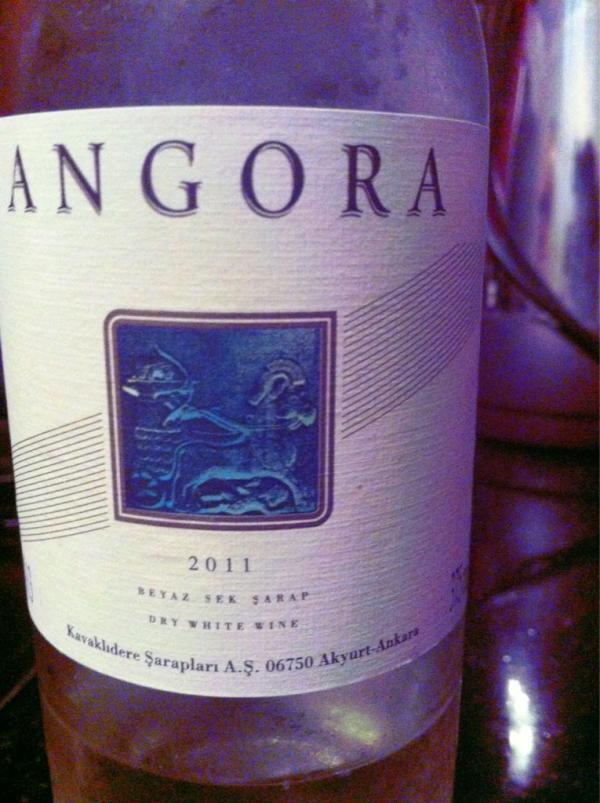
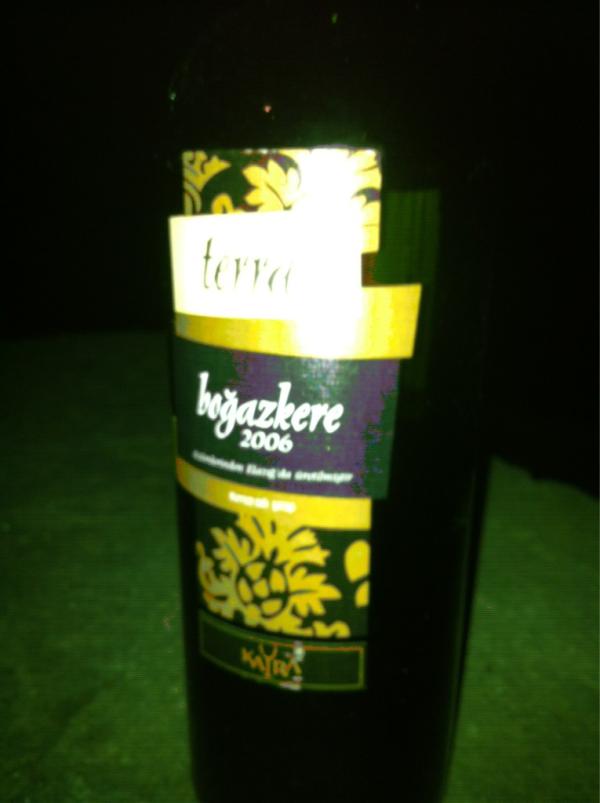
But thankfully in some cities it was very easy, typically the ones in the South West as they were cities swarming with European vacationers. But in others including my husband's hometown of Trabzon it was next to impossible. There were only two restaurants that served wine, and it's only by the bottle, a dangerous option when you are the only one drinking wine! But in one of the major grocery store chains"M" that I liken to a Canadian Superstore , the more m's meaning the bigger the selection. I did find some local wines here and even some Australian. Here are a few of my finds from "MM" A fresh and lively Sauvignon Blanc. 


A native Turkish grape, the wine reminded me of a Zinfandel rich and fruit foward

This one was a blend of a native Turkish grape (Kalecik Karasi) and Syrah. (A common blending grape with Turkish native grapes) I Enjoyed it with a traditional turkish dish called Musakka which is eggplant stuffed with ground beef, and it was delicious.


Black cherries and peppery game notes come together in this blend of native Turkish grapes and once again Shiraz

Here is a little legend of Turkish Wine words that will help you out should you find yourself in a similar position to myself.
Sek = Dry
Beyaz = White
Kirmizi = Red
Sarap = Wine

I'd like to say I learned more Turkish than this during my 3 month long stay, but once I figured out how to order wine I was all good. 

So my final paradox for you is this, Turkey has arguable the first grapes that were made into wine in the world, and they are still making wine out of their native grapes today, but why do they feel the need to blend them with more famous varietals like Shiraz? And some are just producing famous varietals like Cabernet, Merlot or Shiraz. Now I can accept all the other paradoxes of Turkey's wine industry, but this is one I do not approve of. I implore Turkey to preserve their native grape varieties and to stop pandering to main stream society, you have a unique industry don't throw it away just to fit in!....maybe just start offering more wine by the glass so i don't wake up with so many headaches the next time I come to visit my in-laws ;)


Friday, June 15, 2012

Napa and Sonoma Trip


My trip to Napa Valley and Sonoma
There are 200+ different soil types in Napa Valley which is why the wines are so varied in both style and varietal.
Typically 300 bottles will come from 1 barrel.

Numbers varied from winery to winery but there is somewhere between 600-900+ wineries in Napa Valley and yet it is only 4% of California’s total wine production. Oakville has the strictest laws in Napa, but there is no chapatalization (addition of sugar to the wine) throughout California. Although the wines at Raumbauer will make you think there has been sugar added.


Day 1 - 10am 
Cuvaison: 180 acres of Chardonnay, produces 40,000-50,000 bottles a year, it spends 11 months
in oak of which 20% is new oak. They have been using an Optimal Sorter only 10 made
in the world. This revolutionary new technology made in Switzerland uses laser scans to choose the best grapes, the ones with the best density of juice, ect. Will be using for the 2010 vintage onwards. This was by far my favourite tasting experience and the one I would recommend everyone take the time to stop by and enjoy. They have a beautiful deck from which you can sit, sip and enjoy the beautiful rolling hills Napa is famous for.
Tasting notes
2010 Chardonnay Carneros- Colour: Pale yellow with a greenish tint
Nose: nutmeg, bright nectarine, hint of creaminess
Palate: apricot, lime, mineral
2010 S Block Chardonnay- Coulour: bit darker but still has the greenish tint
Nose: nuttier with a crème brulee
Palate: lemons, cream, bright ocean minerality.
2009 Pinot Noir Carneros – 57 acres planted, and spends 15 months in oak.
Colour: light pinky red
Nose: Raspberry and strawberry
Palate: Fresh strawberries, chalk, sour cherries
2010 Block #5 Pinot Noir – Colour: light ruby red pink
Nose: Cranberry, red currants
Palate: smoky, raspberry, spicy, currants.
2008 Cabernet Sauvignon Mount Veeder – 91 pts. Colour: Purple ruby red
Nose: black cherry, blackberry
Palate: chocolate, coffee, black fruits
2009 Brandlin Cabernet Sauvignon – 2000 cases made 92 pts. Colour: Ruby red
Nose: Cassis, black cherry
Palate: Chocolate, pepper, black fruits
Day 1 - Noon
Silver Oak: 25 months in 100% new oak. First winery in Napa Valley to make a single varietal wine (Cabernet Sauvignon) and that is it. Were greatly ridiculed by the wine making community at the time but have proven themselves more than successful.  Tasting room in Napa was ravaged by a fire in 2002, but they rebuilt better than ever. Beautiful grounds and tasting room to walk among. They produce 2 types of Cabernet Sauvignon; 1 from Napa Valley (the more expensive one) and 1 from Alexander Valley in Sonoma. They have also expanded into a new label Twomey that produces varietals like Merlot, Pinot Noir, and Sauvignon Blanc.
Tasting Notes
2007 Alexander Valley – Colour: dark rich purple
Nose: dill and black fruits
Palate: black fruits, cherries, vanilla, dill. Rough tannins.
2000 Alexander Valley – Colour: dark purple
Nose: leather and black fruits
Palate: barnyard, black fruits, softer tannins.

Day 1 - 3pm
Frank Family –Former Disney Executive, had a hand in big movies like Pretty Women, Lion King, Aladin and t.v. shows like Cheers, Taxi and the Golden Girls.
Tasting room is filled with pictures of Rich Frank with famous people like Oprah. They make every type of wine from a Blancs de Blancs Sparkling wine, a Sangiovese, to a decadent dessert Port. This is a huge tourist draw so be prepared to share your tasting with a lot of other people and  truthfully it felt very hectic and not very relaxing at all.

Tasting Notes
2008 Blanc de Blancs- Spends 30 months sur lit Nose: almond
Palate: Apple
2009 Chardonnay & Pinot Noir- Nose biscuit
Palate: Hazelnut, lemon, bread.
2010 Carneros Reserve Chardonnay- Nose: Butter, cream
Palate: apricot, caramel, vanilla, roasted pecans
*Spends 16 months in toasted oak.
2010 Carneros Reserve- Nose: Black currant cranberry
Palate: cranberry, sour cherries, black currants
2009 Napa Zinfandel- Nose: mild bouquet
Palate: chocolate, jammy, black fruits.
2008 Rutherford Reserve Sangiovese- Nose: Sour cherry, gamey
Palate: dry sour cherries.
2008 Rutherford Cabernet Sauvignon- Nose: black cherry, chocolate
Palate: leather, chocolate, coffee, black berry jam
*decanted it becomes very soft
2008 Winston Hill Rutherford- Nose: capsicum, barnyard, black fruits
Palate: Intense black everything, red pepper, dill.
2009 Petit Syrah – Nose: Violet, blackcherry
Palate: Floral Herbal, black cherries.

Day 2 - 10am

Chateau Montelena-3 soil types (1) Alluvial (2) Sedimentary (3) Volcanic. No malolactic
fermentation. Famous for being the winner of the Paris tastings 1976 and 2006,  and it is the setting for the movie “Bottle Shock”. Had a slight disagreement with our guide here when she kept trying to tell me that Chateau Montelena Chardonnay's were of a Bordeaux style. I said 'Surely you mean Burgundy, as it is the home of Chardonnay in France not Bordeaux'. But she kept to her guns so rather than embarrass her I let it slide. But trust me their Chardonnay is made in a Burgundy style, Chablis to be more exact. Which means more minerally less buttery.
 
Tasting Notes
2010 Sauvignon Blanc- Colour: almost clear
Nose: lime, green apple
Palate: melon, pineapple, spicy, green apple
*Great with Thai and Sushi
2009 Chardonnay- Colour: Straw yellow
Nose: crème brulee, lemon
Palate: lemon, lime
* barely any oak aging.
2009 Zinfandel – Colour: brownish ruby
Nose: violet, black cherry
Palate: blackberry, blueberry, jammy
*Good with BBQ, pizza, pasta
2007 Petite Syrah – Grown at Oakville block
Colour: dark purple
Nose: plum, baked cherries
Palate: velvet, green pepper, plums
2009 Napa Cabernet Sauvignon – drink right away
Colour: dark purple
Nose: black cherry, cranberry
Palate: cassis, eucalyptus, mint, cedar
2008 Estate Cabernet Sauvignon – can age up to 35+ years
Colour: bit lighter
Nose: more chocolate, plum, black cherry
Palate, mint, black cherry, bit of chocolate
2004 Estate Cabernet Sauvignon- it was a drier year
Colour: garnet, brown
Nose: leather, plum
Palate: velvet, leather, black berry
2005 Esate Cabernet Sauvignon
Colour:bit darker garnet
Nose: plum, black cherry, blackberry
Palate: stronger tannins, black berry


Day 2 - Noon

Pine Ridge – 4 labels underneath them; (1) Pine Ridge (2) Seghesio (3) Forefront used
only for wholesale (4) Fortis. Winery started originally by Olympic skier Gary Andrus who was inspired by the Bordeaux region. They use gravity fermentation for their Oregon Pinot Noir. They are 1 of only 4 in Napa Valley that use a technique called ‘Oxell’ where the barrels are spun instead of being battonaged.
Next to their tasting room is a demo vineyard that the staff tend to, and that guests can
have a closer look at all the different types of vines. The leaves of a Malbec vine are very big and
have a 3 pronged arm on their leafs, whereas Cabernet Sauvignon has a 5 pronged leaf.
Tasting Notes
2011 Forefront Pinot Gris- Colour: straw yellow
Nose: floral and honeydew
Palate: melons, honeysuckle chamomile, citrus
2011 Pine Ridge Chenin Blanc/Viognier- Colour: almost white
Nose: green grass, pineapple, lime, green apple
Palate: tropical fruits, fresh
2011 Cabernet Sauvignon Oakville Barrel sample- spends 16 to 20 months in oak.
Colour: purple ruby red
Nose: tomato leaf, tobacco
Palate: tomato, cranberry, tannic, cheesy quality
2008 Pine ridge Merlot- Colour: light red, cranberry
Nose: black cherry, plum
Palate: chocolate, cherries
2009 Forefront Cabernet Sauvignon – Colour : light ruby
Nose: cranberry, sour cherry
Palate: mocha and cassis
2009 Pineridge Cabernet Sauvignon – Colour: ruby
Nose: blackberry, cherries and plum
Palate: plums, chocolate, cassis. Blackcherry pie
* this was my favourite from Pine Ridge
2007 Oakville Cabernet Sauvignon Pine ridge – Colour: ruby red going on purple
Nose: vanilla chocolate, black cherry
Palate: velvet, cocoa, chocolate, plum
2008 Pine Ridge Stag’s leap Cab Sav – Nose: Bacon fat
Palate: black fruit
2007 Fortis Cabernet Sauvignon – can age 10 – 15 years
Colour: purple ruby
Nose: plum and leather
Palate: plums, blackcherry, chocolate
2008 Fortis Cab Sav – Colour: purple ruby
Nose: Cherry sauce
Palate: chocolate and plums

Day 2 - 3pm

Tuck Beckstoffer, now this was a bit of mis-communication because we ended up at Tuck's actual office (very stylish) not his tasting room, but Tuck was kind enough to not only open up some bottles right there for us at the office but he even gave us all the bottles of wine he opened to take with us, which we thoroughly enjoyed over the next few evenings. I love these wines!! The names are creative and there is something for every taste. They are fresh, crisp with just the right amount of fruit. The best part they are affordable, and can be every day wines.

Tasting Notes
2011 Hogwash Grenache Rose- Colour: light pink
Nose: rhubarb strawberry
Palate: fresh, lively, red fruits
*1500 cases made
2011 ‘75’ Sauvignon Blanc – 75 is the date the family first moved to the Napa Valley
Colour: light white, greenish tint
Nose: lime, kiwi, grapefruit
Palate: gooseberry very clean beautiful finish
2009 Siempre Pinot Noir – first year this wine was made
Colour: light cranberry colour
Nose: cranberry, sour cherry
Palate: sour cherry, banana, little bit of spice, very elegant
2010 ‘75’ Cabernet Sauvignon- can age 20+ years 100% cab Sav
Colour: dark ruby, chocolate
Nose: bit of an alcohol smell, dark rd fruits
Palate: Leather, chocolate, nutty finish with some bramble in there too.
2008 The Sum 75%Cabernet Sauvignon 15% Petite Syrah
Colour: dark red, purple, rich
Nose: cherry, plum
Palate: bacon fat, black cherry, plum
*Rated 92 pts, but Tuck has said he will never raise the prices of his wine if they get a
good rating he prices them according to what he thinks it is worth and then sticks to it


Day 3 - 10am

Nickel & Nickel
30 acres of Cabernet Sauvignon. This is the winery that the guide seemed like he had
drank way too much coffee so I wasn’t able to take as many notes as I wanted
to. But maybe it was just the early hour after spending the previous 2 days drinking wine. They use 100% Cabernet but feel that aging them is not necessary. They get 3 tonnes
per acres and have a very low yield policy. This was one of only 2 wineries out of 11 that provided a little snack of delicious cheeses alongside the wine. (Quintessa was the other)
Tasting Notes
2008 C.C. Ranch Colour: Ruby red, purple
Nose: black cherry, nutmeg
Palate: juicy, jammy, black cherry, velvet tannins, maple syrup came out after 10 minutes
2008 Copper Streak- Colour: softer colour
Nose: bit of Jalepeno, bit more coffee,
Palate: capsicum, black cherry
* both these spent 18 months in French oak ½ new ½ 1 year old
2008 Rock Cairn Vineyard- Nose: red fruits
Palate: red fruits, jalepenos, green pepper
2008 State Ranch – Nose: fruit bomb
Palate: blackberry, cherries, plums

Day 3 - Noon
Duckhorn – Started with Duckhorn famous for their Merlots, you can even see framed dinner menus from White House events in which Duckhorn was the wine of choice. Then they expanded into Decoy a value brand focusing on the same varietals as Duckhorn, then came Paraduxx focusing on Zinfandel, then Goldeneye focusing on Sonoma Pinot Noir from Anderson Valley,
then Migration focusing on Sonoma Chardonnay from the Russian River Valley. They were extremely generous with us letting us try so much wine in their beautiful garden, but sadly we were on a bit of a time constraint and couldn't stay. (Although if I had known how the next tasting was going to go I would have stayed at Duckhorn)

2011 Napa Duckhorn Sauvignon Blanc- Colour:light white with a green tint
Nose: Very light slate and mineral scent
Palate: spicy pink grapefruit, pineapple, melons, flint and slate.
2010 Migration Chardonnay Russian River Valley
Colour: light straw yellow
Nose: butterscotch
Palate: spicy, lemon, crème brulee
*70% malolactic fermentation
2009 Anderson Valley Pinot Noir- Colour: light pinky ruby
Nose: cranberry, strawberry, hard cherry candy
Palate: hard cherry candy, red fruits, clove spice
2009 Napa Valley Merlot – Colour: dark ruby
Nose: red licourice
Palate: spicy red candied fruits
2009 ‘3 Palms’ vineyard – Colour: ruby
Nose: cherry, plum
Palate: tobacco, cinnamon, earthy and grassy
2009 Decoy Merlot- Palate: chalk black cherry, under ripe plum
2010 Decoy Cabernet sauvignon – Palate: ripe red fruits like cherry and a bit of tobacco
2009 Duckhorn – Palate: more bacon fat leather, and tobacco
2009 Paraduxx C Blend – Palate : maple, black cherry, butterscotch, black fruits
2008 Duckhorn ‘the discussion’ Merlot/Cab. Franc/Zinfandel blend only the 3rd vintage
Palate: black fruits, tobacco
Will age 15+ years

Day 3 - 3pm
Raumbauer- Same family as ‘Joy of Cooking’ author. Has the nickname of 'crack for
cougars'. This tasting room sitting high atop a a beautiful hill with some exquisite gardens surrounding it is a great place to walk around, but that is it. Do not expect any kind of special attention or even a passion about the wine, they pour let you taste and that is it. Plus what you are tasting is incredibly sweet, if that is what you like, by all means enjoy. I would have liked something more from the guide there though instead a simple here is your wine. Some wines have become so popular they don't even try anymore that is the sense I got from this tasting room.

2007 Diamond Select Cabernet Sauvignon- Nose: olive, blackberry
Palate: spicy, strong tannins, mocha, blueberry, blackberry. Very rich
2010 Carneros Chardonnay- Nose: butter, lots of it, cream
Palate: butter cream, bit of almonds, biscuit, melons
2010 Zinfandel- Nose: jammy black fruits
Palate: blackpepper, spicy black fruits, chocolate, velvet tannins
2009 Napa Valley Zinfandel- Nose: vanilla, black plums, raspberry
Palate: brown sugar, jammy fruits
2009 Fiddletown Zinfandel – 100 year old vines
Nose: violets, black fruits
Palate: nutmeg, cinnamon, brown sugar
* more of a dessert wine
Ruby Port – Palate: raisin, figs, very mellow

Day 4 - 10am
Quintessa – They use stainless steel and cement to ferment. First vintage was in 1994.
The Huneis family owns it Augustin and Valeria, same people as Concha y Toro. Family
the land belonged to before them made a contract with them saying ½ needs to be kept
as forest land can’t all be vineyards. So 170 acres are planted with vines the other 100 is
left unplanted they have 15 owl homes. It is also a biodynamic farm. They have rituals
to ask the gods for good weather. Fava beans, sweet peas, and other legumes are planted
throughout the vines to help the nitrogen flow. They drop 50% of their fruits to insure the
best quality. Terroir is very important to them. They use a Meritige blend (not meritage,
refuse to use the French pronunciation) and use Carmenere instead of Malbec as their
Bordeaux blend. They must use only 2 out of the 5 varietals allowed, but there has never
been a year without Cabernet sauvignon. Every vintage is different. They use gravity
fermentation, and also have a optic sorter. The winery itself was carved into the land.
There are 15000 feet of caves. Fruit to glass takes 3 years 2 in new French oak, and 1 in the bottle. If you prefer more than just a Meritage you can try one of their other 6 labels. Illumination makes a zesty Sauvignon Blanc, Saldo The Prisoner an inventive Zinfandel blend, Flowers the classic Chardonnay and Pinot Noir we all love, Neyen and Veramonte for something outside the USA comes from Chile and both produce a wide range of varietals, but if you love Cabernet and just Cabernet look no further than Faust.
Tasting Notes
2010 Illumination Sauvignon Blanc- Colour: bright yellow
Nose: Pineapple, melon, honeydew, gooseberries
Palate: very smooth green apples
*60% from Napa Valley 40% from Sonoma
2009 – Colour: Dark ruby purple
Nose: black cherry plums, sweat and leather
Palate: bit astringent, coffee, sweat, leather, chocolate, fruit is mild
2008- Colour: purple, ruby
Nose: nutmeg, cinnamon, black cherry
Palate: bit more fruit, but all dark fruit, cassis, finish of leather
2007 – Colour: same as 08
Nose: mocha, and cheese
Palate: violet, sweaty, cheesy, black fruits, leather

Day 4 - 3pm
Peter Michael - Now this was a tour my connections as a Sommelier earned me. It lasted almost 4 hours and was lead by none other then acclaimed winemaker Nicolas Morlet. He took me all the way up to the top of the Knights Valley (some 2000 ft up) in Sonoma that Peter Michael's incredible wines grow upon. They sat with me and did a personal tasting of their entire line plus 2 special wines chosen from the library. They have 620 acres but only 120 acres are planted. Between 520ft- 2000ft above sea level. Family has a 100 x 100 plan to have the winery in the Michael family for 100 years to develop a reputation on the same level as the vineyard specific grand crus of Burgundy. Let me tell you I don't think they are too far off already. They have a great climate, and very rocky soils for good drainage. They spend $2 on each cork to ensure the best quality and can guarantee the wine can be aged without worry over the cork. There are little pockets of marine air that heats the vines. The Cabernet Sauvignon is planted at the bottom, La Carrière is the steepest vineyard. Belle Côte is in a spoon shaped bowl of 15 acres. Ma Belle Fille, a Hudson clone is at the top of the mountain 2000ft above sea level, it is south facing and provides great minerality, and boy do I mean great. Chateau Montelena ain't got nothing on these babies.  Mon Plaisir is comparable to Montrachet. Mon Plairsir and La Carrière have thicker
soil while Belle Côte and Belle Fille have thinner soils. 2006 was the longest growing
season for Esprits. 2009 was the first vintage of Ma Danseuse soucred from the Sonoma
Coast. Each wine is vineyard specific. They never do any finning or filtering because it
increases the wine’s aging time and it’s length. They do whole cluster gentle pressing,
and all the fermentation occurs in 100% French oak barrels, that Nicolas has selected
himself as being the top quality. Nicolas also believes it should never be manipulated, so
no acidification, adds very little sulphur. He says ‘no Quasimoding it’. Solar powered, 3
springs provide the water. You can see the different colours of the soils when you look at
two different sites. 2/3 of their wine goes to their mailing list, therefore if you love wine and have the money to invest in it (because these are priced like the great Crus of Burgundy are) I strongly recommend you get on that list!

Tasting Notes
2009 Mon Plaisir- Colour: straw yellow
Nose: lemon, cream, crushed stone
Palate: honey, spicy, cinnamon
*40% from Alexander Valley 60% from Estate
2009 La Carrière – Colour : straw yellow
Nose: white flowers, flour, stone fruits
Palate: more floral, more mineral, better sculpted.
This is considered the most feminine of the Chardonnays and has the steepest slope
2009 Belle Côte- Colour: bit more yellow
Nose: lychee, rose petals, walnuts
Palate: orange creamsicle, spicy finish
*oldest vines
2009 Belle Fille – Colour: slightly hazy
Nose: baked apple, chamomile, nectarine, herbal
Palate: pastry, intense and powerful
*highest vineyard, considered the Brother to La Carriere
2003 Cuvée Indigene – Colour: dark gold
Nose: brioche, oyster shell, lemon custard, burnt sugar
Palate: marmalade, hazelnut, caramel, crème brulee
2003 Point Rouge: Colour: dark gold
Nose: dried apricot, candied lemon, hazelnuts and almonds
Palate: nugat, cinnamon raisin brioche, white truffle, bit spicy
*My favourite, comparable to Batard Montrachet. Old Wente vines
2010 Ma Danseuse – Colour: light purple
Nose: sandlewood, almond liquor, cranberry, strawberry
Palate: red currant, graphite, black truffles, new leather, raspberry and strawberry
* Fall release, big hot wine, high alcohol
2007 Moulin Rouge – Colour: bit lighter, more purple
Nose: strawberry, kamphur, cedar
Palate: ripe cherries, cranberries, pencil lead, strawberry
*from the Monterey Area
2010 Aprés Midi – Colour: straw yellow, green tint
Nose: tropical fruits
Palate: papaya, guava, pineapple, and lemon oil
2009 Les Pavots – Colour: dark purple
Nose: blueberry, moha, cassis, black cherry
Palate: blueberry, black truffle, plum sauce, blackpepper, black sherry liquor
*very masculine
2009 Esprit des Pavots – Colour: dark purple
Nose: black cherry, red pepper, blueberry
Palate: tobacco, grey pepper, cigar box
*freer style, never jammy

So there you have it, a very detailed account of my trip to Napa Valley. I hope it inspires you to do your own visit, or at the very least, inspires you to crack open a bottle, and Enjoy!